
Blogging about my Torikae baya manga translation project.
Thoughts from Episode 20: Sara tries (and fails) to leave his wife
After making way last time so that Shi no Hime and Tsuwabuki can be a regular couple, Sara concentrates fully on his Kamogawa rerouting job. The workers expect an aloof nepo baby, but are amazed to see him getting hands-on as he tries to push his worries from his mind. He returns after a few weeks (I think!), is congratulated on the efficacy of his work, then goes to his parents to declare his intent to divorce Shi no Hime.
After making way last time so that Shi no Hime and Tsuwabuki can be a regular couple, Sara concentrates fully on his Kamogawa rerouting job. The workers expect an aloof nepo baby, but are amazed to see him getting hands-on as he tries to push his worries from his mind. He returns after a few weeks (I think!), is congratulated on the efficacy of his work, then goes to his parents to declare his intent to divorce Shi no Hime.
Sara’s mother anticipates Kakumitsu pulling some trick, and sure enough, he isn’t interested in hearing Sara’s explanations. During a carriage ride to Kakumitsu’s residence, Sara tries inventing plausible reasons for wanting a divorce, but his wily father-in-law deflects them all, and when they arrive, we learn why: it turns out Tsuwabuki’s done it again, and Shi no Hime has another baby on the way! This is proof, in Kakumitsu’s eyes, of Sara and Shi no Hime’s undying love.
They have a celebratory feast, and just as Sara is about to have a serious face-to-face talk with his wife, the smell of alcohol turns his stomach and he runs out to the balcony. Moments later, Shi no Hime runs out too, due to morning sickness, leading Sara to have a terrible, terrible realisation.
Sara’s talk of leaving Shi no Hime during this chapter and the previous one might make you wonder quite what their marriage situation actually is. If you cast your mind back to Episode 7, readers got quite a clear impression of how a marriage was formalised in the Heian period. Sara had to visit Shi no Hime for three nights in a row and have their union acknowledged by her father, Kakumitsu. But what next? What does their marriage – and others – look like? And what would it mean for them to split up?
Saito evidently also thought this would be confusing for readers, as she includes an afterword in Volume 6 about Heian period marriage customs. She reiterates that a marriage was declared not through a bureaucratic registration but through three consecutive visits and a feast. This is followed by an explanation of three marriage types:
1. kayoikon (通い婚) or “duolocal” marriage, where the man and woman continued to live separately after marriage. This was the most common arrangement, and such relationships would continue on the basis of the couple still liking each other.
2. shoseikon (招婿婚) or “uxorilocal” marriage – also called mukoirikon (婿入り婚) – where the groom, especially one with less wealth or status, joined his bride’s household. This is the situation for Sara and Shi no Hime in Torikae baya.
3. shosaikon (招妻婚), a subtype of “neolocal” marriage (meaning that the couple live in their own new home), where the fabulously wealthy man has his wife or wives come to live in his mansion. This is normal for the Emperor, but we also see it in the case of Marumitsu, which is maybe modelled after the many wives in Genji’s Rokujoin residence in The Tale of Genji.
So, as we’ve established, Sara and Shi no Hime’s marriage is the second type. Sara is effectively part of her family (well, they were already first cousins*, but I mean part of her household). That is where he would normally reside as long as he and his wife are having no problems, but as we know by now, they do have problems.
In that case, what can they do? Saito doesn’t go deeper into this side of things, but as I understand it, much like marriage itself, divorce wasn’t a very formalised thing. It seemingly happened quite often – Sei Shonagon of Pillow Book fame is said to have been divorced even before she began writing – but there were no forms or legal processes. Especially for marriages of the first type, it was probably sufficient for the couple to simply stop seeing each other. However, it’s a bit more complicated for Sara, as he lives with Shi no Hime. He can announce his departure and leave the house, but as a nice young man, he wants to persuade his father-in-law that this is a responsible choice. But unfortunately, even when he pretends that he’s found a new lover, all Kakumitsu does is ask him not to have more than three women at once.
Anyway, although there’s one more angle on this in the Emperor’s interest in inviting Suiren for a type-3 marriage, this is as far as I’ll go on the topic of marriage and divorce for today. So with that, I’m afraid it’s time we go our separate ways…
*this was normal!!
Thoughts from Episode 19: Fly me to the moon
Sorry about the slow posting schedule lately! To be honest, it’ll probably continue to be quite irregular, as the actual work of translating this manga is keeping me very busy. That means I’m several chapters ahead of what I’m covering on the blog, but one upside is that writing the blog posts then lets me come back to previous chapters with a bit more distance and hopefully get a new perspective.
Anyway, Episode 19 sees the Emperor continue to give Sara extra attention, now that he’s witnessed the beauty of Sara’s sister (who actually was Sara). After an archery event, Kakumitsu takes Sara to one side to question why he’s been neglecting his wife Shi no Hime (Kakumitsu’s daughter), and Sara realises that Tsuwabuki hasn’t been spending time with her either.
Sorry about the slow posting schedule lately! To be honest, it’ll probably continue to be quite irregular, as the actual work of translating this manga is keeping me very busy. That means I’m several chapters ahead of what I’m covering on the blog, but one upside is that writing the blog posts then lets me come back to previous chapters with a bit more distance and hopefully get a new perspective.
Anyway, Episode 19 sees the Emperor continue to give Sara extra attention, now that he’s witnessed the beauty of Sara’s sister (who actually was Sara). After an archery event, Kakumitsu takes Sara to one side to question why he’s been neglecting his wife Shi no Hime (Kakumitsu’s daughter), and Sara realises that Tsuwabuki hasn’t been spending time with her either.
Sara gets Tsuwabuki and leads him away. Tsuwabuki is initially excited, until they end up visiting Shi no Hime together. During the following awkward scene, Sara and Shi no Hime seem to get along nicely, and Sara takes their daughter Yukihime away to look at the birds Shi no Hime has kept since Episode 10. He deliberately releases one of the birds, then goes off supposedly to bring it back, leaving Shi no Hime and Tsuwabuki alone to work out their… situation.

Panel from volume 4, page 145.
©Chiho Saito/Shogakukan
The title of this chapter is “A Pair of Birds” (つがいの鳥), where つがい refers to a mated pair*. Of the four birds Shi no Hime had, one has died, leaving three left. Sara releases one of the three so it can find a mate in the wild; at the same time, he removes himself from the situation to let the lovers Shi no Hime and Tsuwabuki be together. It’s a sad bit of imagery that I found quite evocative, especially at this point:
SARA stands in the long grass, holding up his hand and looking up to the sky. The bird is flying in front of the moon and KAKUMITSU’s residence is visible in the background.
SARA [thinking] You should leave the cage behind and live by yourself.
In the outside world,
SARA turns his head thoughtfully.
SARA [thinking] maybe you can find a mate.
Meanwhile, the image of Sara walking out sadly under the moonlight at the end reminds me of some other moments in the story featuring the moon – of which there are quite a few! And this is something that also comes up a lot in the original Torikaebaya monogatari. The moonlight is often described, reminding us of something I was getting at last time, which is that life in general in the Heian court was dimly lit. Moonlit scenes stand out because it’s genuinely unusual for anything to be clearly visible at night!
The moon plays a recurring role in both literal and metaphorical forms, so just now I’ll go over a few examples of each from the manga. There are other memorable instances of characters looking forlornly at the moon: Tsuwabuki in Episode 9, Sara himself in Episode 4 and Shi no Hime in Episode 10. Watching the moon can be an enjoyable activity too, though, as we see when Sara and Shi no Hime do it together in Episode 10 and when the Emperor plans a seasonal moon viewing party in Episode 18.
References to the moon also come up as a euphemism for menstruation. Early on, Umetsubo speculates that Sara’s monthly breaks from work are evidence of tsuki no sawari, and the first sign that Shi no Hime is pregnant is that she has missed her tsuki no mono. And when Tsuwabuki and Sara do their crossdressing Yamato Takeru performance for greedy local governors in Episode 14, the lyrics feature similar lunar references.
But the reason I think the moon has symbolic significance is the way it shows up in poems. For example, I’ve already mentioned Episode 10 – which is aptly titled “A Spring Night’s Moon”. When Tsuwabuki encounters Shi no Hime in the moonlight, she recites a sad poem about how the moon reflects her emotions, and Tsuwabuki jumps in with a smooth reply (I posted translations of this pair of poems here).
The scene where Sara gazes sadly at the moon in Episode 4 is a more complicated case. There, he recites a poem (referenced again later) about how his tears should flow just as easily as Tsuwabuki’s – which comes up in a slightly different situation in the original Torikaebaya monogatari. However, this is the same scene where he first encounters Umetsubo, and at the equivalent point in the original story, he does come up with a Sad Moon Poem:
月ならば かくてすままし 雲の上を あはれいかなる 契りなるらん
I like the poem Saito chose to include here, but this one would’ve worked pretty well too! The sentiment it conveys – that he’s sad about being unable to operate at court quite like other young men – fits the scenario well.
In the manga, there’s at least one more Sad Moon Poem yet to come. Terrible events we’ve yet to cover here result in Sara being miserable in Uji, and he recites a lonely poem as he watches the moon over the river. And apart from that, there are a lot of other intriguing links to the moon throughout Torikae baya – the fact that the eclipse sees the sun (symbolising the Emperor) hidden by the moon, maybe some connection between sun/moon and yin/yang, the fact that Suiren’s name (being used by Sara as a court official) is literally “Moonlight” (月光)!
Altogether it’s far too much for me to cover here, and it’s something I need to spend more time thinking about, but perhaps I can get to that in a future post!
*The word つがい is also part of the title of Saito’s current manga series Hi no Tsugai, which continues her recent run of Heian period stories.
Thoughts from Episode 18: Feast your eyes on this!
Last time, Sara was tasked with sorting out the flooding of the Kamogawa. Since then, he’s been getting on with the job, and when he reports back, the Emperor wants to speak to him up close. Tsuwabuki fears that the Emperor knows something about Sara, but really, it’s because he has designs on Suiren – which is just as bad! Sara agrees to have Suiren perform music at an upcoming moon-viewing party. But after Umetsubo makes an embarrassing effort to threaten Suiren (who is in hysterics when her bullying methods are lifted directly from The Tale of Genji), Togu decides it’s too risky to attend the party at all.
On the day of the party, Sara informs the Emperor that Suiren is unwell. When the Emperor then sends a sympathy gift her way, Sara encourages her to reply with a rubbish poem to put him off. Unfortunately, the Emperor decides to show up in person, and when Suiren instinctively flees the scene, Sara is left pretending to be her while the Emperor attempts a conversation from the other side of a blind. As the Emperor leaves, a convenient gust of wind lets him see Sara – who doesn’t know who he thinks he saw.
Last time, Sara was tasked with sorting out the flooding of the Kamogawa. Since then, he’s been getting on with the job, and when he reports back, the Emperor wants to speak to him up close. Tsuwabuki fears that the Emperor knows something about Sara, but really, it’s because he has designs on Suiren – which is just as bad! Sara agrees to have Suiren perform music at an upcoming moon-viewing party. But after Umetsubo makes an embarrassing effort to threaten Suiren (who is in hysterics when her bullying methods are lifted directly from The Tale of Genji), Togu decides it’s too risky to attend the party at all.
On the day of the party, Sara informs the Emperor that Suiren is unwell. When the Emperor then sends a sympathy gift her way, Sara encourages her to reply with a rubbish poem to put him off. Unfortunately, the Emperor decides to show up in person, and when Suiren instinctively flees the scene, Sara is left pretending to be her while the Emperor attempts a conversation from the other side of a blind. As the Emperor leaves, a convenient gust of wind lets him see Sara – who doesn’t know who he thinks he saw.
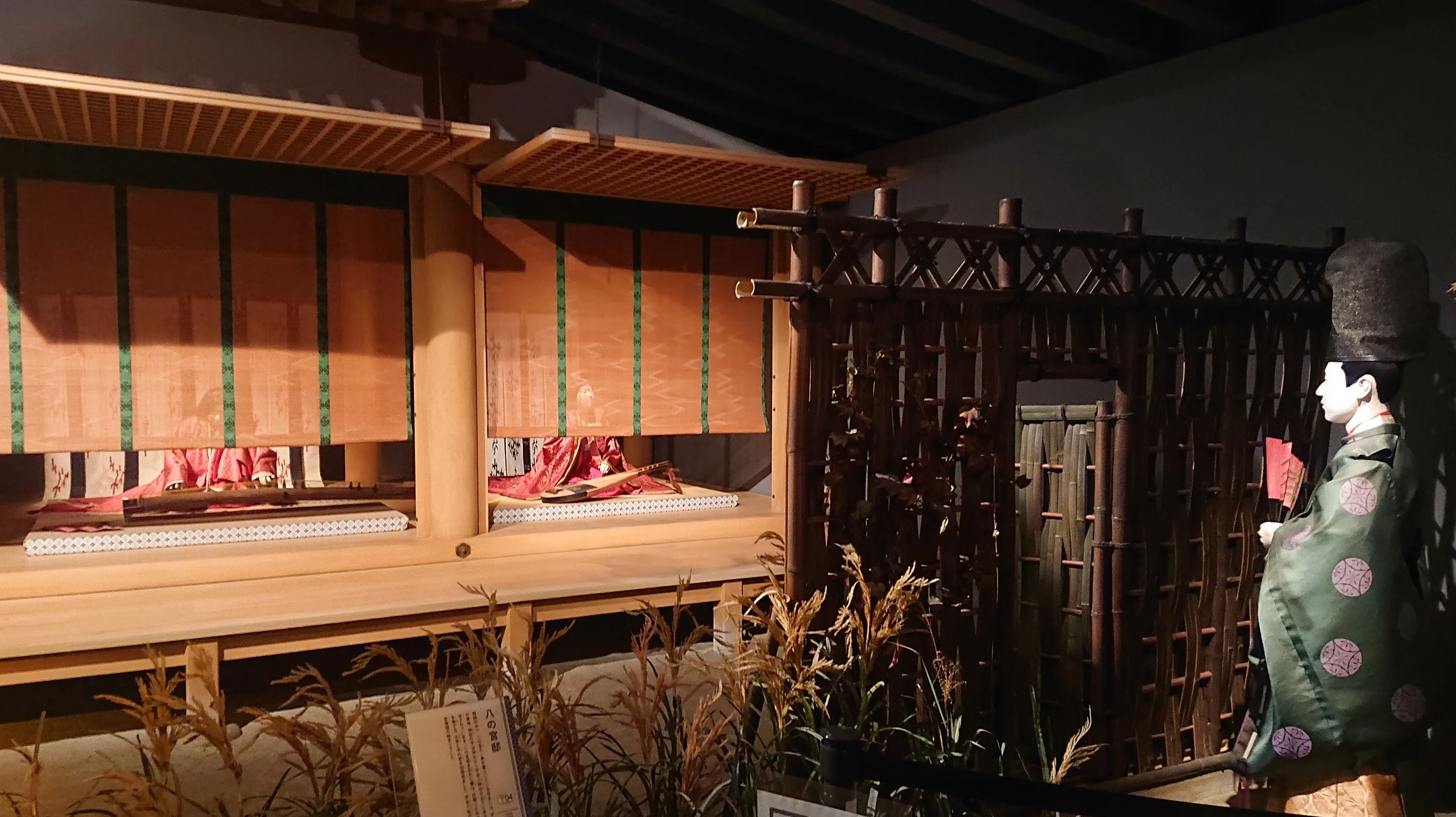
Recreation of a famous kaimami scene at The Tale of Genji Museum in Uji.
That last scene provides today’s little topic for discussion: the idea of kaimami (垣間見). Literally “looking through a gap in a fence”, this refers to the practice of observing someone indirectly, from behind some form of partition. These acts of voyeurism were all the rage in the Heian period, when architecture didn’t create much real privacy, but inner areas were dim and dark, and members of the opposite sex – especially those of different social positions – weren’t normally supposed to see one another. And because of that, kaimami scenes show up a lot as a kind of “love at first sight” motif in The Tale of Genji and other places.
In Torikae baya, as well, we see that men are not supposed to directly look at women of high status if they aren’t married. In Sara’s early days at court, he gallantly shields the court ladies from sight when the blind hiding them falls down. When he first encounters Umetsubo, she strikes him with her fan for having the insolence to look up as she walks by. And when courting Shi no Hime, he sits outside her sleeping area and simply hopes she’ll respond when he speaks.
On the other hand, Tsuwabuki, who sees himself as a passionate romantic like Genji, is unsurprisingly the manga’s #1 peeping tom. The standout scenes are in Episodes 8-9, when he goes to pay Suiren an unexpected visit – at first he is enchanted by her looks, but her violent reaction leaves him feeling confused – and in Episode 10, when he hears Shi no Hime playing the koto and spots her from afar. In both of these incidents, the thrill of these furtive glimpses isn’t enough for Tsuwabuki; he is immediately too excited to hold himself back.

Tsuwabuki sees Suiren for the first time.
Panel from volume 2, page 114. ©Chiho Saito/Shogakukan
When the Emperor in today’s episode asks Sara to arrange a kaimami, a major worry is of course that it will end the same way as those scenes with Tsuwabuki. Eventually, he speaks with Sara and believes him to be Suiren, thanks to the blind between them, but Sara is still panicking over the possibility that the Emperor will rush in after all. But when he finally gets the glimpse he was looking for, he is satisfied and leaves. Obviously, one thing doesn’t inevitably lead to the other. Sometimes kaimami is just a matter of idle nosiness. It’s not even necessarily a phenomenon of men ogling women – the moment where Sara hides the court ladies from view happens because they were so eager to get an eyeful of handsome young guys like Sara and Tsuwabuki that they knocked the blind down themselves.
Anyway, it’s very interesting to think about! Kaimami scenes appear in Torikae baya because they’re such a well-known aspect of Heian culture and therefore part of the aesthetic Saito wants to portray. But at the same time, the concept is a reminder of how the society operated and particularly how separate men’s and women’s lives were. In a way, the same cultural expectations and architectural practicalities that lead to practices like kaimami are what make it possible for Sara and Suiren to live as they do with very few people noticing anything out of the ordinary.
Thoughts from Episode 17: Remember that time when…?
I’m back after a little pause while I attended the 2025 BAJS conference last week! I enjoyed getting a chance to present on some of the interesting aspects of Saito’s adaptation, including touching on topics that I’ve explored on the blog. I also got to hear many other interesting talks about everything from Genji-inspired kimono patterns to evil smart houses. And if you happen to be reading this after having been at my talk, thank you!
Now, returning to Torikae baya, Episode 17 sees Sara go to the home of his wetnurse Aguri, filled with regret. After looking all over the capital for Sara, Tsuwabuki shows up, but Aguri throws him out once she realises that he’s involved with both Shi no Hime and Sara.
I’m back after a little pause while I attended the 2025 BAJS conference last week! I enjoyed getting a chance to present on some of the interesting aspects of Saito’s adaptation, including touching on topics that I’ve explored on the blog. I also got to hear many other interesting talks about everything from Genji-inspired kimono patterns to evil smart houses. And if you happen to be reading this after having been at my talk, thank you!
Now, returning to Torikae baya, Episode 17 sees Sara go to the home of his wetnurse Aguri, filled with regret. After looking all over the capital for Sara, Tsuwabuki shows up, but Aguri throws him out once she realises that he’s involved with both Shi no Hime and Sara.
Meanwhile at court, there are concerns about flooding of the Kamogawa during the autumn typhoons, and mockery of Togu’s efforts to help. When talk turns to Togu’s naishi no kami Suiren, old man Fujiwara (remember him? he's a priest now!) hints heavily that the Emperor should have her become one of his women – annoying both Marumitsu and Kakumitsu for separate reasons. Just as the Emperor then enquires about the absent Sara, they spot an extremely unseasonal blooming cherry branch. He sends the branch to Sara, who has been at Aguri’s house all this time sending cold replies to Tsuwabuki’s constant letters. The Emperor’s gift inspires Sara to return to the palace, and his smart suggestions earn him a new responsibility to deal with the river problem.
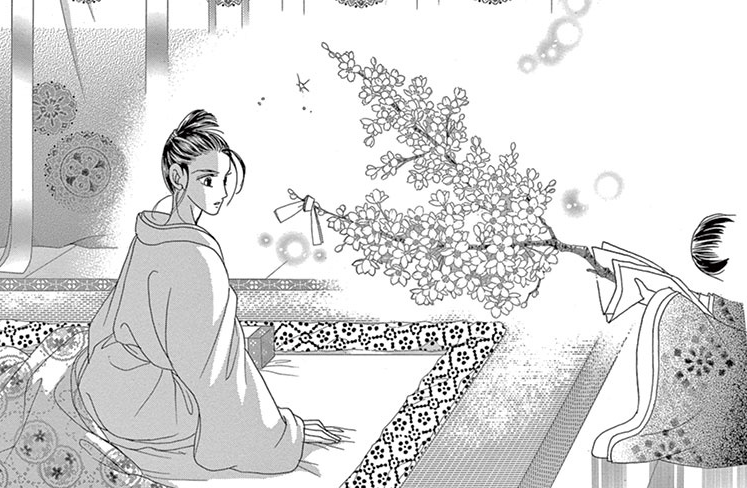
Sara is surprised to see Aguri handing him a blooming cherry branch with a letter.
Panel from volume 4, page 67. ©Chiho Saito/Shogakukan
Something we see a lot of in this chapter is callbacks to moments from earlier in the story. One of these is right in the title: 野分の桜 (nowaki no sakura). Here we have the word nowaki, referring to a typhoon, particularly in the early autumn. This word came up back in Episode 12, when – during the spring – Shi no Hime compared Sara’s gentle demeanour to spring sunlight and Tsuwabuki’s passion to a nowaki. The title of Episode 17 once again juxtaposes nowaki with an image of spring, but the out-of-season reference is reversed: while Tsuwabuki was like a nowaki in spring, the Emperor sends Sara a blooming cherry branch in autumn.
Incidentally, this chapter title was a bit of a tricky one to translate. I would expect readers to know what a typhoon is, but it’s relevant to the setting (and the callback to Episode 12) that the title uses a more archaic term that’s specifically associated with autumn. And that’s a lot of information to try and convey when the original title is very short in Japanese – especially if you opt for “cherry blossom” which is already two words. The translation I’ve ended up with, at least for now, is “Autumn Blooms”. This actually omits both of the specific nouns to emphasise the seasonal contrast instead, but I like that it’s short and that it can be read both as modifier-noun (meaning “blooms in autumn”) or as noun-verb (meaning “autumn is blooming”).
Another callback comes in the message the Emperor sends along with the branch. He sends the miraculous unseasonal flowers to Sara, whom he says “waits on a miracle”. This calls back to Episode 15, where the Emperor refers all the way back to Episode 3. He remembers that Sara went to confront the eclipse in order to break a curse, and that according to Sara, the curse has still not been lifted. This has the effect of reminding readers of the tengu’s curse that supposedly afflicts Sara – and in the story, it acts as encouragement to Sara to take control of his life instead of waiting for fate to take its course.
And one last point I want to bring up is the poems that Sara and Tsuwabuki exchange by letter. As I discussed several weeks ago, there are many poems in the manga that come directly from the original Torikaebaya monogatari. Here, there are several poems from the equivalent point in the original story, with Tsuwabuki insisting that he’s so worried he could die, and Sara questioning his seriousness. Finally, just like his counterpart in Torikaebaya monogatari, Sara sends this poem:
まして思え 世に類なき身の 憂さに 嘆き乱るる ほどの心を
(私の心のことも少しは考えてみてください 世に例のない身になった辛さに嘆き乱れる私の心も)
The wording calls back to one of the poems I mentioned in that earlier post, where Sara expresses his sadness to Tsuwabuki in Episode 4. In that poem, he says that he suffers in a way that can’t compare to others, and in my translation I used the phrase “my singularly wretched existence”. So of course, wanting to reflect this reference, I included that phrase again when translating the Episode 17 poem:
"Consider something worse: a singularly wretched existence and a heart wracked with woe."
(Think for a moment about how it feels for me. In my heart, I constantly lament the pain of being unlike anyone else in the world.)
Given the way that these two poems link to each other in the original story, it makes sense that Saito wanted to preserve them both in the adaptation – and I hope I made that connection clear too!
Thoughts from Episode 16: Tsuwabuki, NO!!
The plot developments in Torikae baya – especially in recent chapters – have a bit of a trainwreck quality to them. Not just in the sense that you can’t look away from the ongoing disaster, but also in the sense that as each carriage derails one by one, the situation just keeps getting worse. And if you thought everything was going wrong in Episode 15, you ain’t seen nothing yet!
Last time, Tsuwabuki accidentally discovered that the colleague he’s obsessed with is a bit bustier than he expected – but he’s still not quite sure what that means. In the meantime, Sara avoids him, but wisteria-loving matchmaker Shikibu-kyo no Miya hears that they’ve fallen out and so invites them both to a poetry party on a hot summer’s night. Sara wants to just make a quick appearance and then leave, especially after Tsuwabuki’s awkwardly emotional recitation, but Shikibu-kyo insists that he perform next. The heat and stress cause Sara to faint, so Tsuwabuki rushes in to take him away before anybody investigates him too closely.
The plot developments in Torikae baya – especially in recent chapters – have a bit of a trainwreck quality to them. Not just in the sense that you can’t look away from the ongoing disaster, but also in the sense that as each carriage derails one by one, the situation just keeps getting worse. And if you thought everything was going wrong in Episode 15, you ain’t seen nothing yet!
Last time, Tsuwabuki accidentally discovered that the colleague he’s obsessed with is a bit bustier than he expected – but he’s still not quite sure what that means. In the meantime, Sara avoids him, but wisteria-loving matchmaker Shikibu-kyo no Miya hears that they’ve fallen out and so invites them both to a poetry party on a hot summer’s night. Sara wants to just make a quick appearance and then leave, especially after Tsuwabuki’s awkwardly emotional recitation, but Shikibu-kyo insists that he perform next. The heat and stress cause Sara to faint, so Tsuwabuki rushes in to take him away before anybody investigates him too closely.
Once they’re alone (with Shikibu-kyo’s encouragement), Tsuwabuki decides he needs to know what’s going on. And when Sara awakens in a fresh change of clothes, he realises the secret is now truly out. After the two have another intense exchange, Tsuwabuki promises to keep Sara’s secret. Seconds later, though, he “can’t control his feelings”, so he does what Tsuwabuki tends to do in these situations.
Now that Sara and Tsuwabuki’s relationship has taken a terrible new turn, it seems like a good time to look at how the two compare. In particular, I’m interested in how they both relate to masculinity.
Tsuwabuki can be seen as a typical, even exaggeratedly typical, Heian romantic hero. He’s emotional and passionate, and he’s constantly thinking about romance. One of the first times he and Sara interact, he’s already trying to get closer to Sara’s sister he’s been hearing about. And he openly weeps when Sara tells him to give it a rest.
Sara, on the other hand, isn’t a typical Heian man, despite all his celebrated personal qualities. As early as Episode 4, we hear that people are gossiping about Sara’s apparent disinterest in chasing girls, and when he gets married, he just lies perfectly still next to his new wife. For that matter, he even learns about the birds and the bees from Tsuwabuki (wild foreshadowing in hindsight)!
But despite this, Sara doesn’t seem all that desperate to be more of a man. He’s willing to make an effort to fit in, but notably, when he has a vision of the tengu during the eclipse, he only wishes “to be a real man” to make life a bit less complicated. When the incident is over, he even feels relieved that his wish didn’t come true. He is who he is, and he’s more concerned about being able to continue living his existing life at court. And so, during this chapter’s disastrous sexual encounter with Tsuwabuki, he thinks:
SARA [thinking] There's nothing "lucky" about this.
What will become of my life as a man?
What will happen to me now?
Ironically, Tsuwabuki seems much more anxious about being a man than Sara is. To readers, it’s clear early on that he’s infatuated with Sara, but he keeps trying to find other explanations for his feelings. First, he assumes he must really be interested in Sara’s identical sister, and then he decides it’s actually just lingering affection for Shi no Hime. As time goes on, he gradually recognises that it really is Sara who he wants, but he fears that this would mean that he isn’t the ladies’ man he desperately wants to be. And as a sign of how important that identity is to Tsuwabuki, here’s what he thinks to himself in Episode 9, after discovering that he wasn’t really that into Suiren once he saw her in person:

Panel from volume 2, page 129.
©Chiho Saito/Shogakukan
TSUWABUKI [thinking] At the age of 18, am I already an old man?
Could I be sick?
I must get to the bottom of this.
As he and his men cross a bridge, he looks up wistfully at the moon.
TSUWABUKI [thinking] If I don't,
my life as a man will be over!!
As always, Tsuwabuki is being terribly dramatic here, but he describes these feelings in almost the very same way Sara describes his own feelings later – and this goes to show how important Tsuwabuki’s “life as a man” is to him. Tsuwabuki causes a lot of problems in this story, and it all basically comes back to his anxiety over living up to this masculine ideal.
There might be a bit of a delay before the next post, as I’ll be presenting at the BAJS conference later this week, but once I get to it, you can see what happens next in this wild ride!
Thoughts from Episode 15: The secret’s out (sort of)
This chapter, the last one in Volume 3, sees recent plot threads come to a head. Sara has just been promoted to Middle Councillor (chunagon, 中納言), but he now strongly suspects that the father of Shi no Hime’s child is Tsuwabuki. While he attends a celebratory party, Tsuwabuki is with Shi no Hime at that very moment, and as usual seems to be thinking mainly about Sara. When Sara steps away from the party, he overhears Tsuwabuki and Shi no Hime, confirming his fears.
Some time later, once the cherry trees are in bloom, Sara speaks with the Emperor, who it turns out vividly remembers what Sara told him during the eclipse incident (now a couple of years earlier). After the Emperor says “nothing will change while you merely wait on a miracle” and a bit about acting for other people than oneself, Sara makes a big decision.
This chapter, the last one in Volume 3, sees recent plot threads come to a head. Sara has just been promoted to Middle Councillor (chunagon, 中納言), but he now strongly suspects that the father of Shi no Hime’s child is Tsuwabuki. While he attends a celebratory party, Tsuwabuki is with Shi no Hime at that very moment, and as usual seems to be thinking mainly about Sara. When Sara steps away from the party, he overhears Tsuwabuki and Shi no Hime, confirming his fears.
Some time later, once the cherry trees are in bloom, Sara speaks with the Emperor, who it turns out vividly remembers what Sara told him during the eclipse incident (now a couple of years earlier). After the Emperor says “nothing will change while you merely wait on a miracle” and a bit about acting for other people than oneself, Sara makes a big decision.
Sara invites Tsuwabuki to a tiny room and reveals that he knows the truth about the baby. In an emotional conversation, he offers to leave Shi no Hime so she can be with Tsuwabuki, but Tsuwabuki can’t accept this. Eventually, Sara gets so annoyed with his irresponsible attitude that he changes his tune and announces their friendship to be over. This is an even worse outcome for Tsuwabuki – who is in love with Sara – and so… he accidentally admits that he is in love with Sara. Confused and angry, Sara goes to leave, and in an attempt to stop him, Tsuwabuki inadvertently grabs his chest, potentially discovering Sara’s secret.
Things in the story were already going badly wrong before this point, but mostly behind closed doors. Episode 15 is where it all really starts to unravel. Aptly, the title is “Secrets” – though I’m not quite satisfied with this translation. The original title is 秘め事 (himegoto), which does mean “secret”, but it also happens to include the sound “hime”, homophonous with 姫 which basically means a girl or young lady in the context of the Heian court (for example Shi no Hime, “fourth daughter”). I feel like this double meaning is deliberate, given that it could apply to both of the “secrets” in this chapter: the true parentage of Sara and Shi no Hime’s daughter, and Sara’s hidden identity. Perhaps at some point I’ll manage to come up with a new title that reflects all of this!
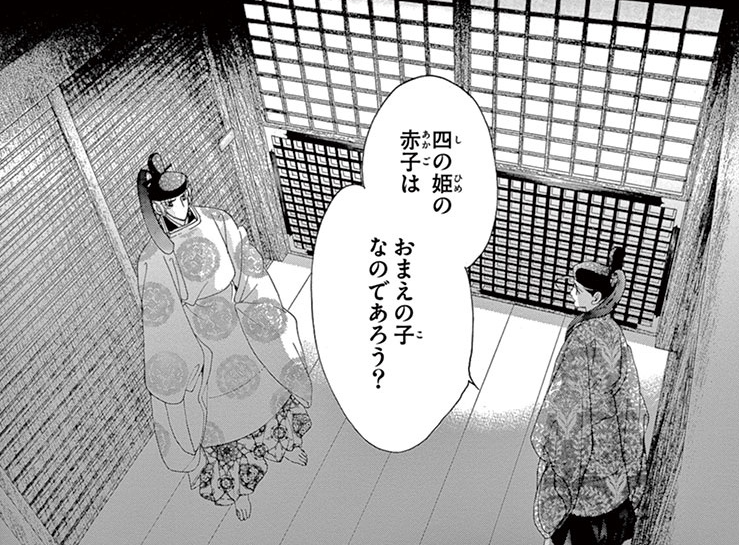
Panel from volume 3, page 172.
©Chiho Saito/Shogakukan
On a different note, I want to say a bit today about changes to the original story of Torikaebaya monogatari. First of all, even though Saito does a lot to make the characters sympathetic and interesting, she doesn’t change an awful lot in terms of the major plot points. Now, some of those plot points could seem quite cruel to our protagonists considering their characterisation in the manga – sorry to spoil a story that’s been out for about 800 years, but the siblings don’t get to continue living in their initial roles! – so what does Saito do about this in Torikae baya?
The main thing she does is, instead of changing where the plot ends up, she changes the way that it happens. I wrote before about the recurring tengu appearances as a great example of expanding a small point in Torikaebaya monogatari in interesting ways, and it’s similar with some of the big plot developments. Whereas the discovery of the chunagon’s secret in the original story happens very fast, the manga breaks it down and spreads it out over multiple chapters.
An important effect of this is that it lets us see more of how the characters feel. In Episode 15, Sara takes the initiative to go and speak to Tsuwabuki, making the difficult decision to end his marriage so that Shi no Hime can have a fulfilling relationship with a man who loves her. He also makes the conscious choice to tell Tsuwabuki that he knows about the affair. As the scene plays out, Sara’s cold determination gives way to anger. Finally, after a moment of shock for both him and Tsuwabuki, he flees, scared about what has just happened, but also still unsure what Tsuwabuki is actually thinking.
That’s quite a lot of material that doesn’t appear in Torikaebaya monogatari! However, the ultimate outcome is the same in both versions of the story. Saito could have changed these plot points entirely, but she didn’t, and so I would rather characterise these adjustments not as fundamental changes but as additions or expansions.
And on that note, I’ll leave it until next time, where the situation goes from bad to worse!
Thoughts from Episode 14: Location, location, location
Thanks to a bright idea from Suiren, Sara and Tsuwabuki are sent off on a months-long expedition to get regional governors to release their hoarded rice. It turns out their strategy is to dazzle the governors with a performance based on the legend of Yamato Takeru, before pulling out their swords and threatening them.
Thanks to a bright idea from Suiren, Sara and Tsuwabuki are sent off on a months-long expedition to get regional governors to release their hoarded rice. It turns out their strategy is to dazzle the governors with a performance based on the legend of Yamato Takeru, before pulling out their swords and threatening them.
One night later in the trip, Shikibu-kyo no Miya is awaiting the two of them. He flirts aggressively with Sara, leading Tsuwabuki to step in to take one for the team, but just as things start to heat up, Sara returns the favour and saves Tsuwabuki from an inevitable gay awakening. Sara tells Tsuwabuki he’s a great friend he never should’ve doubted, but when he returns to Heian-kyo just after Shi no Hime gives birth, he realises his newborn daughter looks a lot like his loyal buddy.
There’s a lot that could be said about this chapter, but the thing I want to focus on today is locations! After a long period where nearly all the action takes place in the capital, Episodes 13 and 14 both see the protagonists go further afield. In Episode 13, they visit Yoshino, and in this chapter, Sara and Tsuwabuki travel around quite a bit.
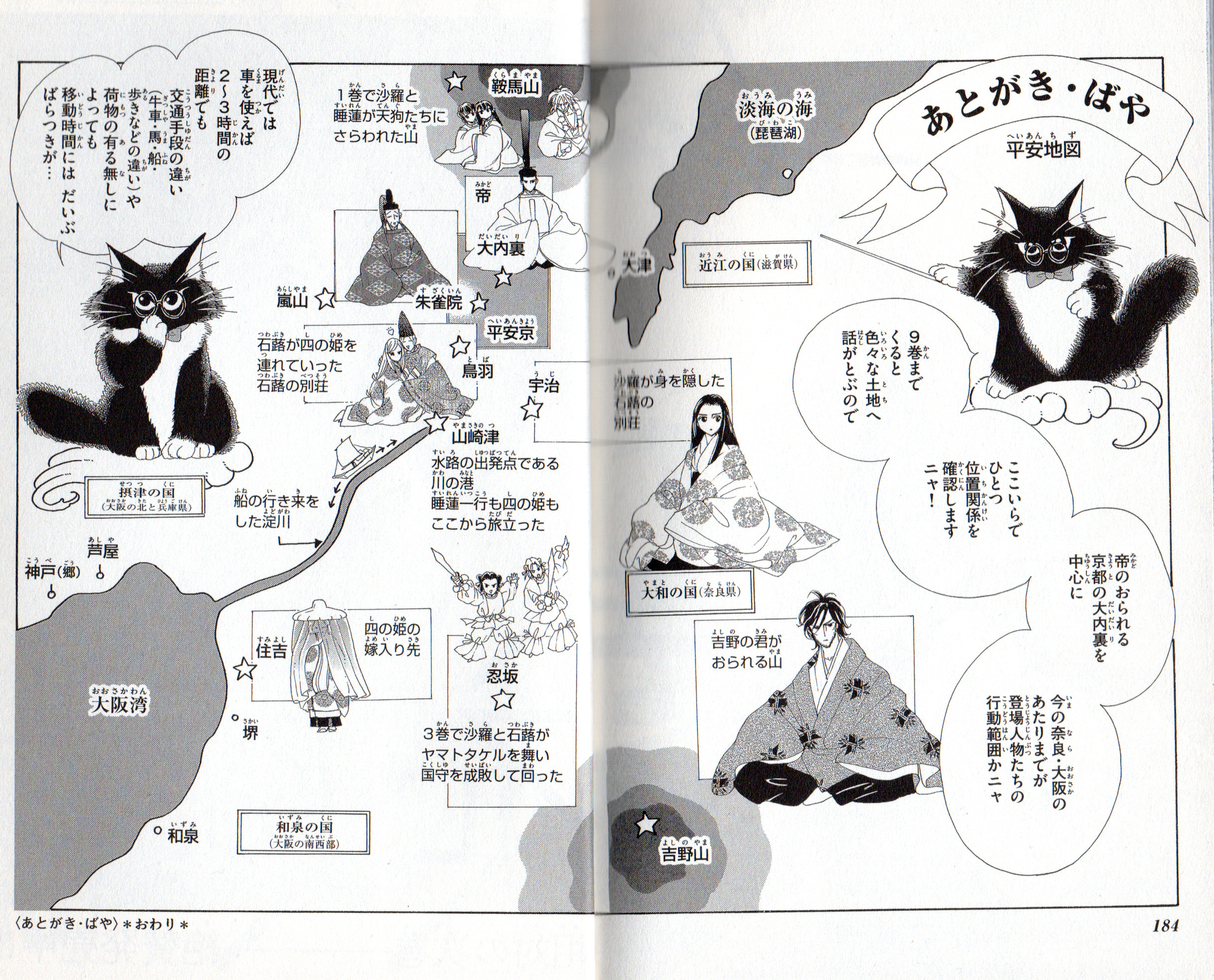
Map from volume 9, pages 184 and 185.
©Chiho Saito/Shogakukan
The only named place they visit in Episode 14 is Osaka – that’s 忍坂 with a short “o”, not the more famous 大阪 with a long “o”. The place that appears in Torikae baya is in modern-day Nara Prefecture, whereas the big city of Osaka we know today didn’t exist with that name until a few hundred years later. Incidentally, another more famous “Osaka” in the Heian period was 逢坂 (also a long “o”), an important barrier on the route from Heian-kyo to the eastern provinces, which appears in a number of poems.
Now, as you may have gleaned from my previous post where I talked about checking out locations from the manga in person, places in Torikae baya are often portrayed in quite specific detail. Places like palace buildings are clearly drawn based on real-life counterparts, and Saito uses some of the afterwords in each volume to provide plans of Heian-kyo and the palace. For the latter, she points out that she made a few adjustments to the exact layout compared with what the real Heian court was like, but just having it drawn up is really helpful for understanding how everything comes together.
One afterword also features a map of the whole relevant area, showing locations like Kurama and Yoshino – and since it’s in volume 9, there are also other places from much later in the story. A nice thing about this map is that Saito gives a little explanation of how people got around the area and how long it took. Typical means of transport included boat, horse, ox-drawn cart or walking, and even using the fastest of these, a trip that would take a few hours today might have required a day’s travel or more at the time of Torikae baya.
A couple of months ago, I added the Extras page as a place for the series timeline (which is still getting semi-regular updates!), and now I’ve added a map there too. You can then click through to a Google map where you can see where these historical locations line up with modern-day geography. I’ve tried to include all specified locations from the manga, but as there are probably some later ones that I can’t remember right now, you might see some updates to this as well. Please check it out!
Digression: Research trip report
Something different this week! I’ve hinted in previous posts that I’ve been on a trip in Japan over the summer, and now that I’m finally back, I want to talk about what happened.
The main purpose of the research trip – which I managed to do with funding from the Great Britain Sasakawa Foundation, the Japan Foundation Endowment Committee and the School of Literatures, Languages and Cultures at the University of Edinburgh – was to take part in a summer school programme for classical Japanese at Doshisha University in Kyoto. Over six weeks and a bit, I learnt the basics of classical Japanese (kobun) and how to understand texts. While I was there, I also took the chance to visit some of the locations from Torikae baya and – very excitingly!! – I went to Tokyo and spoke to Saito Chiho in person about the manga.
Something different this week! I’ve hinted in previous posts that I’ve been on a trip in Japan over the summer, and now that I’m finally back, I want to talk about what happened.
The main purpose of the research trip – which I managed to do with funding from the Great Britain Sasakawa Foundation, the Japan Foundation Endowment Committee and the School of Literatures, Languages and Cultures at the University of Edinburgh – was to take part in a summer school programme for classical Japanese at Doshisha University in Kyoto. Over six weeks and a bit, I learnt the basics of classical Japanese (kobun) and how to understand texts. While I was there, I also took the chance to visit some of the locations from Torikae baya and – very excitingly!! – I went to Tokyo and spoke to Saito Chiho in person about the manga.
First, the course. For about three hours each weekday morning, we spent the first week or two going through all the main grammar points in Shirane’s Classical Japanese: A Grammar. It’s a pretty dry book, but there isn’t really any way around reading over and memorising all the conjugations and auxiliary verbs and particles, and I think this textbook handles it all pretty comprehensively! And even though this intensive approach was a lot of hard work and effort, it meant we could fairly quickly move on and start practicing applying what we’d covered by looking at original texts.
Classical Japanese is very different from modern Japanese. A lot of the words resemble ones we know now, but they might behave differently, or have different meanings. Plus, there are words for things that we just don’t have in the modern world. A lot of the conjugation rules in modern Japanese evolved as the sounds or uses of older patterns changed with time, sometimes frustratingly turning into things that look a lot like different older rules (I’m convinced that in whatever form Japanese takes in the future, there will be a whole new set of unrelated structures that all abbreviate to ん). But once you start getting the hang of the old rules, then you can start breaking it all down and trying to understand. And you know, it does actually get easier with practice!
In the last post, I gave an example of a part in Torikae baya that I’ve now been able to retranslate with better understanding of how to approach classical quotations. I’m looking forward to applying this knowledge elsewhere too, to translate poems like these better, but also to take a look at the original text and see for myself where different interpretations come from.
In between studying, buying things to take home and seeing an all-women Castlevania musical, I found time to seek out some of the locations that appear in the manga. The places in Torikae baya are often depicted in very specific detail, and I was keen to see some of them for myself and get a sense of where things are and what they’re like.
I went to Kurama, where Sara and Suiren get kidnapped by the “tengu” bandits in Episode 1. The main attraction is the temple, but if you keep walking up the mountain, you reach an area where gnarled tree roots are exposed above the ground. It’s very striking, and that’s probably why Saito put it in the manga! After Sara and Suiren run away from the gang, this is where Marumitsu finds them sleeping in the morning.
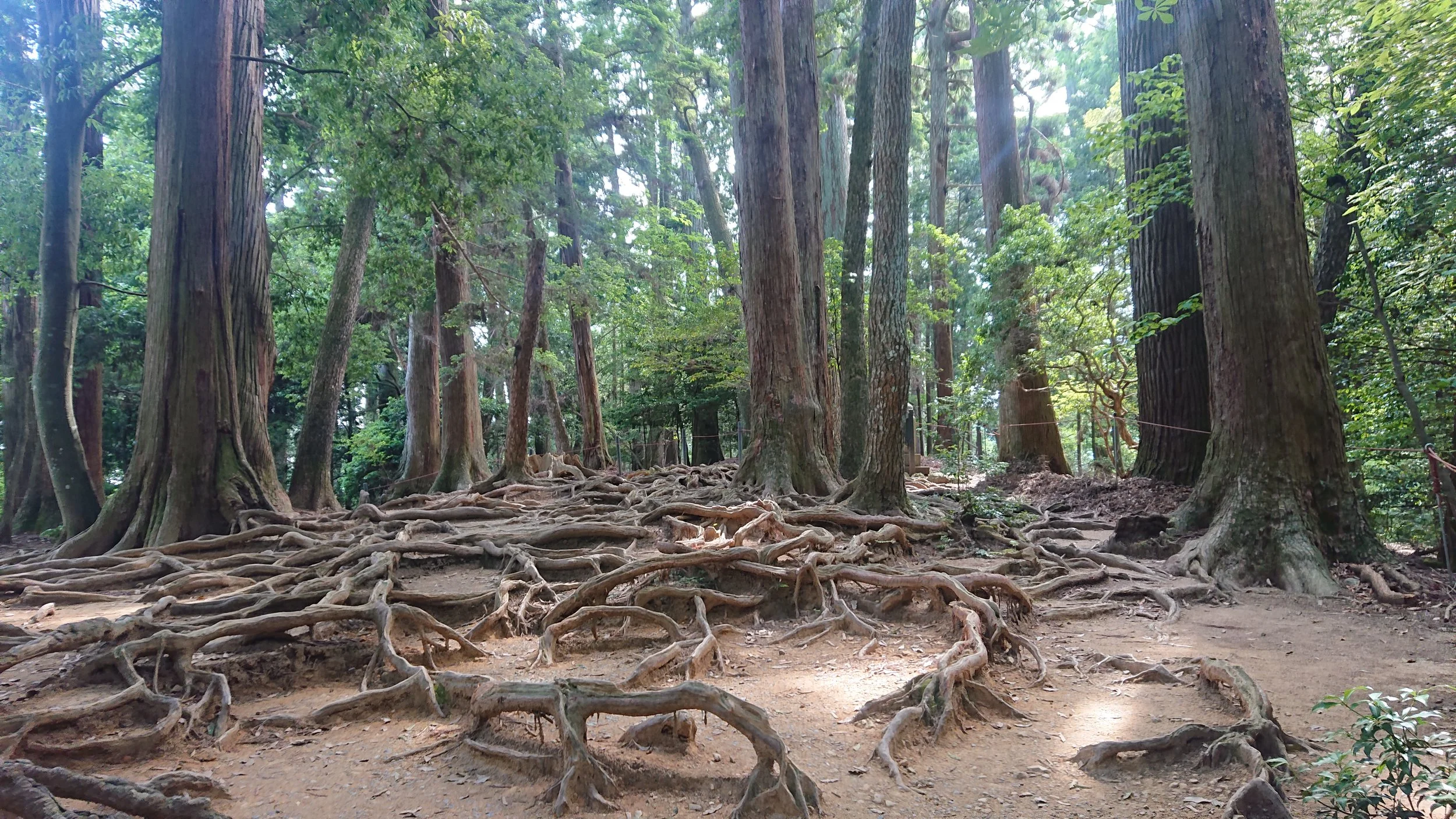
Trees in Kurama.

Marumitsu finds Sara and Suiren.
Panel from volume 1, page 33. ©Chiho Saito/Shogakukan
Conveniently, the university and my accommodation were both near the old Imperial Palace, which is easier to visit than I think it used to be. Buildings here serve as models for their counterparts in Torikae baya, including the Shishinden and the Seiryoden.
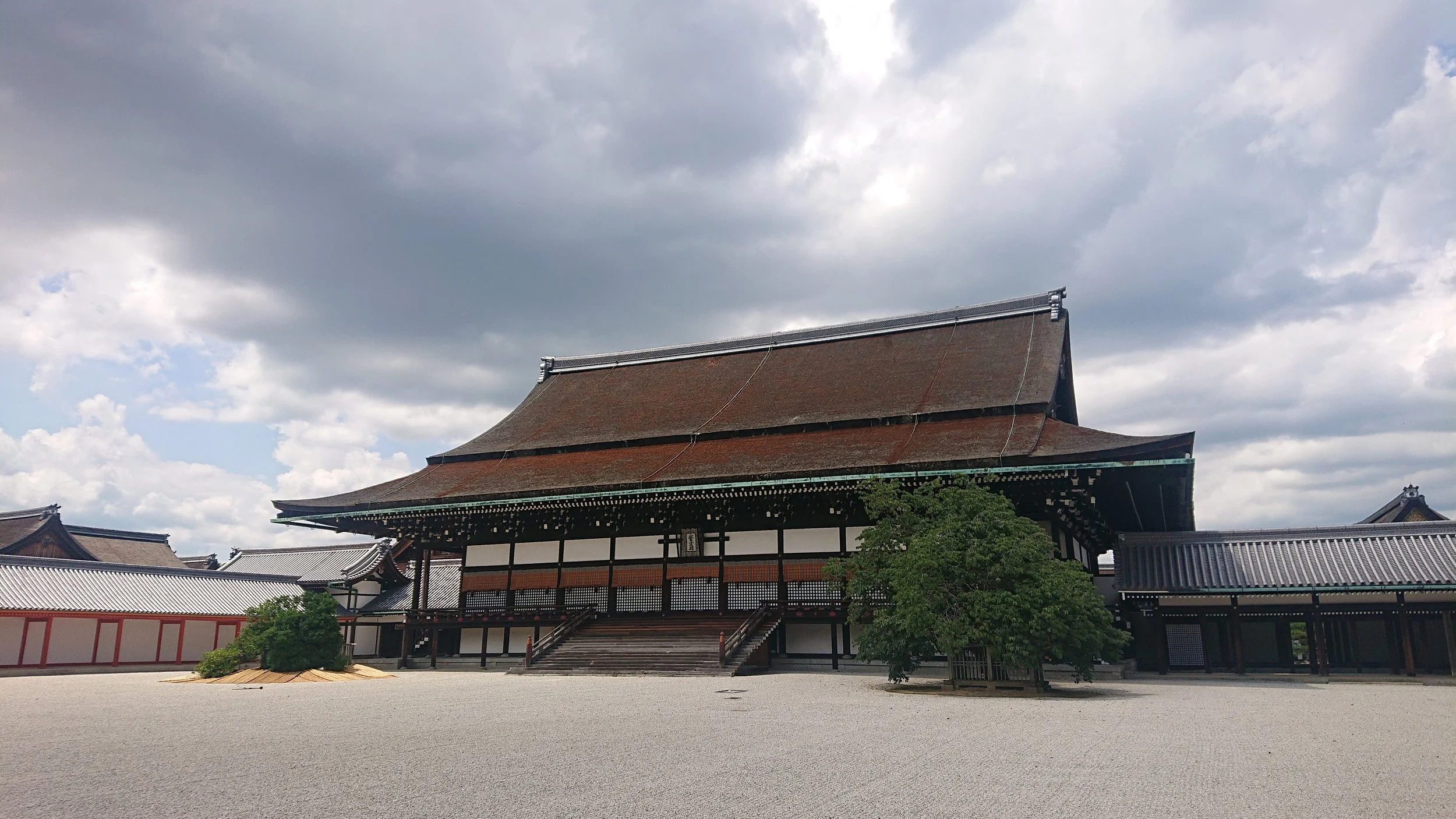
The current Shishinden at the Imperial Palace in Kyoto.
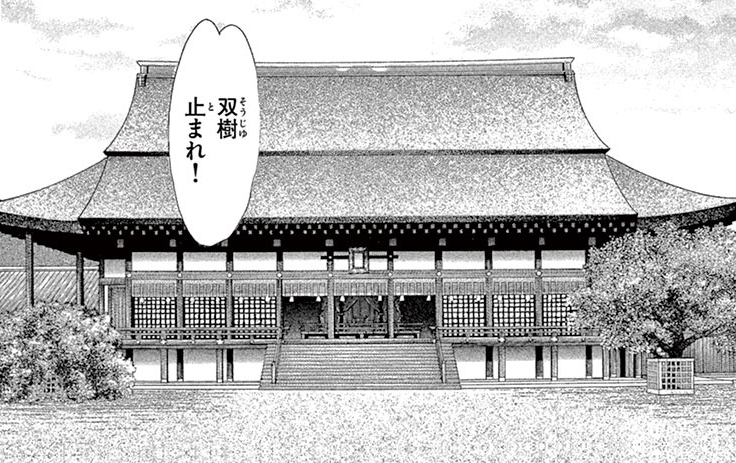
The Shishinden as it appears in the manga.
Panel from volume 1, page 116. ©Chiho Saito/Shogakukan
Yoshino is another major location in Torikae baya. I’ve been there a few times before, but always to Yoshinoyama, the mountain itself, so I hadn’t seen it quite as it appears in the manga. By visiting the area around Yume no Wada this time, I understood that the palace they go to must be this one, and that Sara and Suiren’s search for fireflies probably takes them along the Kisadanigawa and up the mountain from the east side, not at all the route that visitors take to Yoshinoyama nowadays. I also happened to go there at about the same time of year as Episode 13 in the manga – I didn’t spot any fireflies, but I suppose they didn’t either in the end!
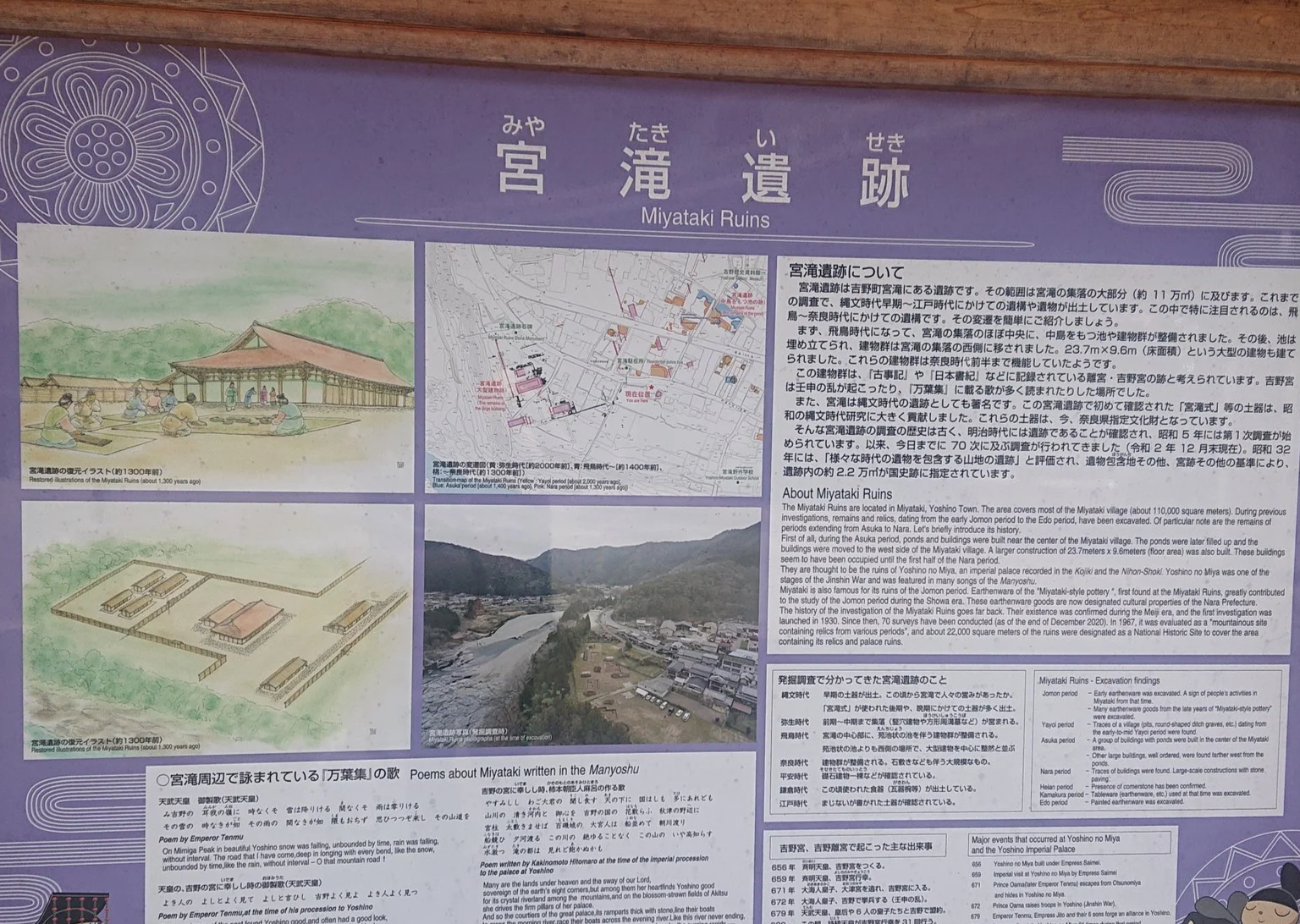
Part of a notice board at the excavation site of the Miyataki Ruins in Yoshino.
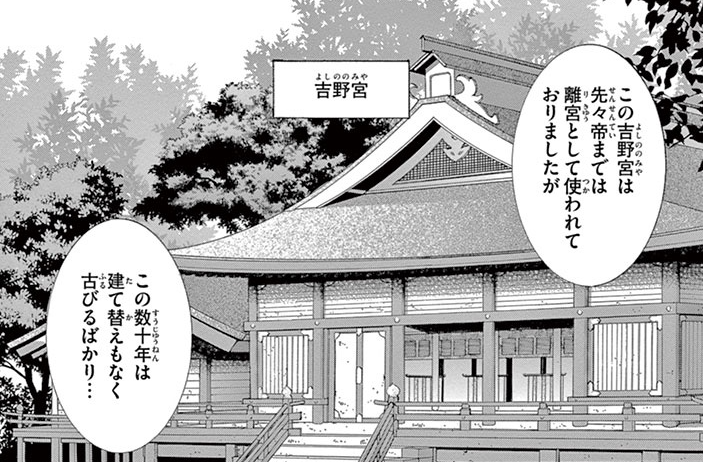
The palace at Yoshino in the manga.
Panel from volume 3, page 80. ©Chiho Saito/Shogakukan
The class took a field trip to Uji, mainly because of its connection to the Tale of Genji, but it is also a location a bit later in Torikae baya, particularly around the Ujibashi, a bridge that has various historical and literary claims to fame (though it has been rebuilt many times and the current one is really quite new). The nearby Tale of Genji Museum also has some useful information about customs and architecture of the Heian period.
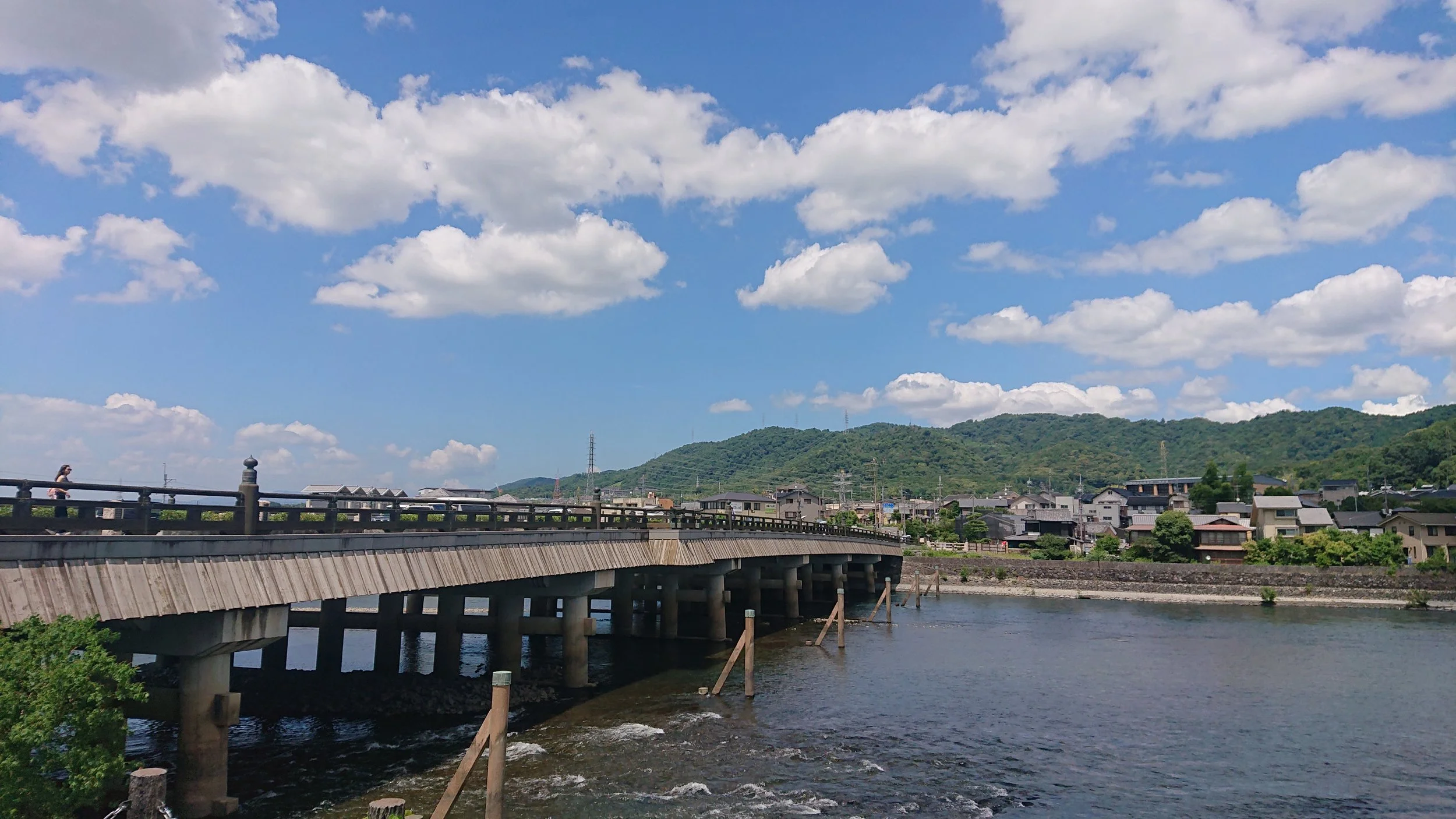
The current Ujibashi.
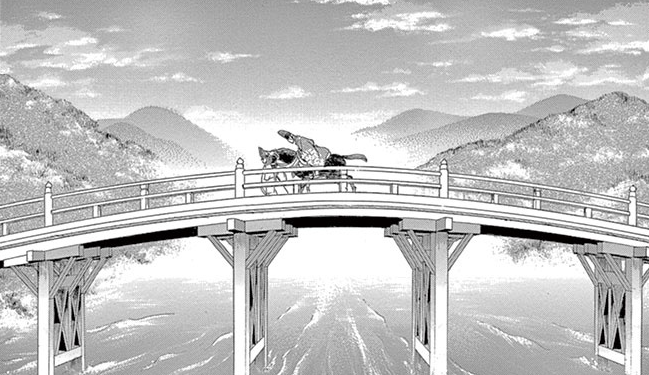
Tsuwabuki crossing the Ujibashi.
Panel from volume 6, page 155. ©Chiho Saito/Shogakukan
Getting to see these places for myself was fun, but informative too! I got a clearer sense of scale and distance, which helped me understand some of the manga scenes better. For example, you get a very strong sense of the danger Sara and Suiren face in Episode 1 when you realise they have to flee uphill to such a remote hiding place on the mountain. There’s no guarantee that their father would find them before the bandits do – if at all.
Besides these specific locations, I also visited places like Torin’in, a temple known for sarasoju flowers, and the Kyoto International Manga Museum. All in all, it was good just to have the chance to stay for an extended period right in the middle of where Torikae baya takes place!
And last but not least, I was lucky enough to get to interview Saito Chiho herself! Though there is a bit of information available about how she approached writing Torikae baya in a few magazine interviews and the afterwords that appear in each manga volume, I was interested to learn more about the process, her sources, etc. During our interview, I heard about how much background research was involved and how she wanted to show the near-constant annual cycle of ceremonies in the Heian court. I got a strong sense that making the story feel more positive (not that everything is exactly happy in the manga, but in contrast with the quite austere and fatalistic Buddhist messaging of the source material) was a key factor in the adjustments she made in the adaptation.
I also got to see her workroom and take a look at the many books that informed the adaptation. Besides different versions of Torikaebaya monogatari, there was a lot about Heian period customs, beliefs and – of course – clothes. Afterwards, I even managed to find copies of a couple of the books she showed me! It was a really exciting opportunity, and I learnt a lot and got plenty of motivation from it too.
And so that’s what I’ve been up to for the past couple of months! It’s been so busy that the main translation work has slowed down a bit, but now that I’m home, I’ll get back on track and hopefully be able to do a better job with everything I’ve learnt since!
More thoughts from Episode 13: Yume no Wada
Like I said in the previous post, Episode 13 is one of two chapters that I initially translated a year ago, and that means I’ve had time to think about it a bit more than some of the others. On that note, I’d like to write about it some more, and use an example from Episode 13 to return to a topic from another earlier blog post: poetry!
Like I said in the previous post, Episode 13 is one of two chapters that I initially translated a year ago, and that means I’ve had time to think about it a bit more than some of the others. On that note, I’d like to write about it some more, and use an example from Episode 13 to return to a topic from another earlier blog post: poetry!
One of the things that’s so interesting about Torikae baya is that it doesn’t always directly follow the source material, but includes adjustments and additions to the story. Many of the additions serve to give more detail to the world by giving readers a sense of what life in the capital was like in the Heian period, such as by showing various annual ceremonies. There are also references to other works of classical literature, from the Heian period or earlier.
In that earlier post about poetry, I talked about how important writing and sharing poetry was in Heian court culture and how Saito features some of the exact poems that appear in the original Torikaebaya monogatari, but not all of them come from there. And rather than attempt to produce poetry in classical language herself, Saito includes poems from other classical sources.
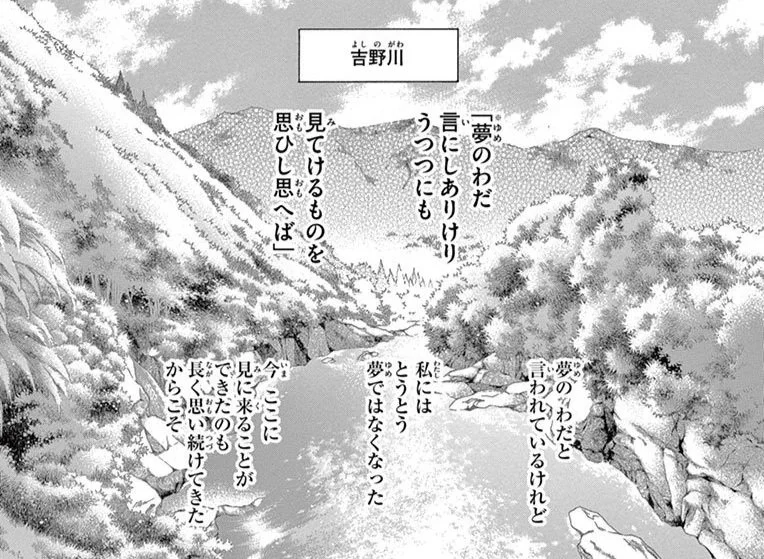
Panel from volume 3, page 79.
©Chiho Saito/Shogakukan
At the beginning of Episode 13, Togu and her entourage reach Yoshino, and the chapter opens with her looking out upon a body of water where two rivers, the Yoshinogawa and Kisadanigawa, meet. She then appears to recite a poem, shown first in classical Japanese, and then followed by an explanatory modern Japanese version:
夢のわだ 言にしありけり うつつにも 見てけるものを 思ひし思へば
(夢のわだと言われているけれど 私にはとうとう夢ではなくなった 今ここに見にくることができたのも長く思い続けてきたからこそ)
This poem comes from the Man’yoshu, one of the most significant poetry anthologies in Japan, which was compiled by some time in the Nara period (710-794 CE). That means that we aren’t expected to imagine that Togu just came up with this by herself, but that she too is referring to well-known existing literature. It’s a very apt poem for her situation, as it is about the place she’s visiting! Yume no Wada (which translates roughly to “pool/ravine of dreams”) is a name for this location, and in the poem, the narrator shares the feeling of finally seeing it for themselves after having wanted to for a long time.
When I first tried translating this, I had to rely heavily on the modern Japanese version provided as well as other modern glosses and explanations available (like this one and this one). But I can now approach it a bit differently, as I’ve recently been in Japan studying classical Japanese (kobun) and visiting locations including Yume no Wada!
Learning how to read classical Japanese obviously helped me to understand poems like this one. I should point out that since “classical Japanese” refers mainly to the language as used in the Heian period, there are aspects of Nara period usage that are different from what I studied – this might be why there are expressions in the poem I can’t just conveniently find in my classical dictionary! Still, being able to analyse a poem like this and at least work out which parts require additional research makes the task much more realistic.
And going there in person was also helpful! At first, I had “wada” down as “cove”, because even with dictionary entries and the detailed image in the manga, it was hard for me to quite understand the nature of this bit of water. From seeing it for myself, I understand that the Kisadanigawa is much narrower than the Yoshinogawa, and that where the narrow part feeds into the wider river, it forms this slower-moving patch of water.
And so, armed with this knowledge, I feel better able to do justice to this interesting use of additional literary references! Here is my current translation:
“Yume no Wada” / is but a name. / Wide awake, / I have now seen it, / just as I long dreamt.
(They call it the Pool of Dreams, but it is not merely a dream to me any longer. I have finally come to see it for myself, all because I desired to for so long.)
I like to think that now that I know more and I’ve given it some deeper thought, I’ve come up with a decent translation. Something that was actually quite handy about rendering this in English is that “dream” can be used to mean “long for [something]”, letting me incorporate the poem’s contrast between dreams and reality in a slightly different way that meant I could keep the order of information the same as in the original poem. Meanwhile, having the lengthier modern version as an opportunity to go into more detail about the meaning allowed me to stick to something brief and abstract for the poem itself.
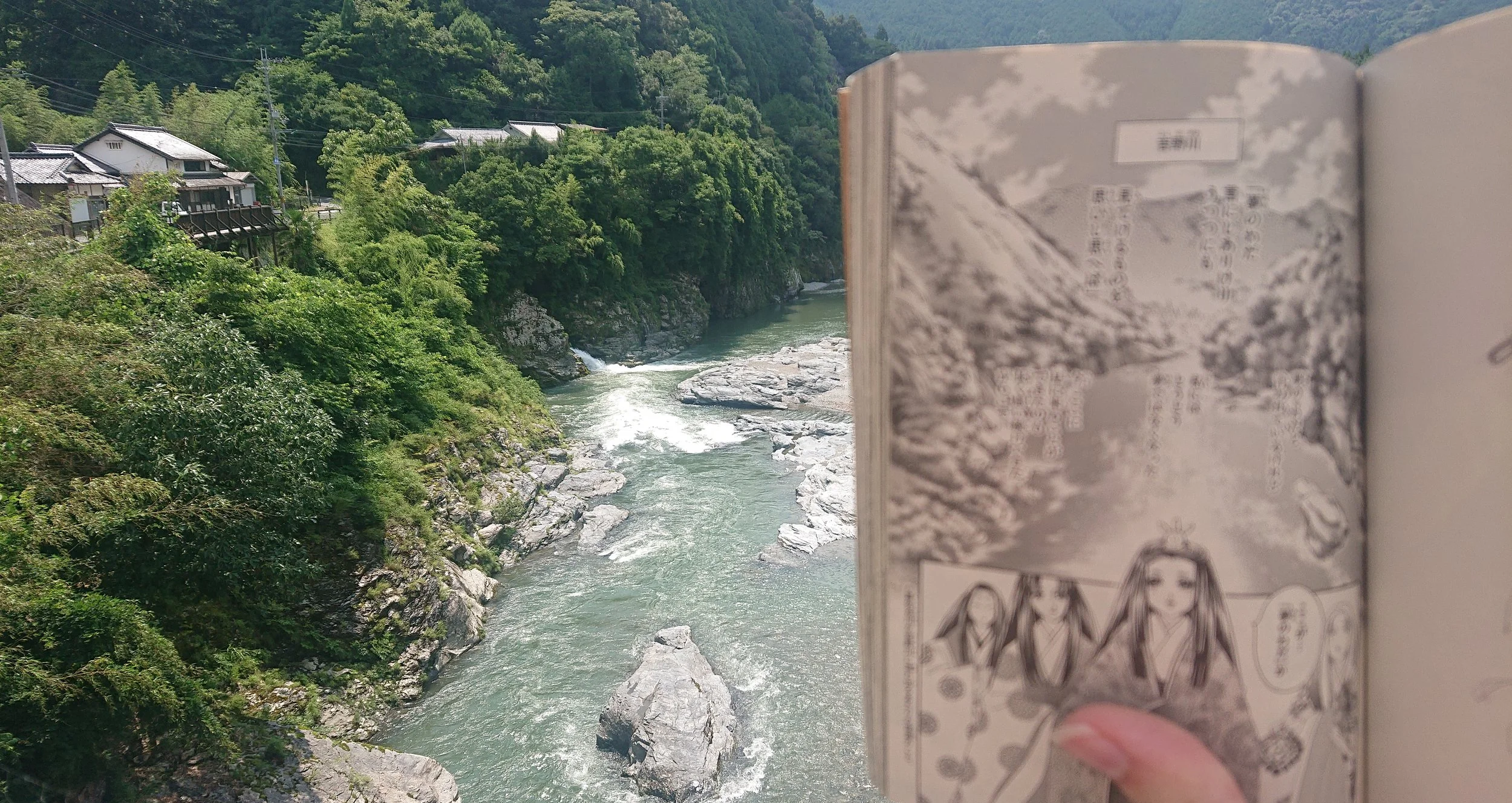
And of course, it wasn’t lost on me that making a pilgrimage to the spot where Togu cites the poem about finally seeing the “pool of dreams” in real life doubled up on the original reference. So to commemorate the dream-versus-reality within a dream-versus-reality, I also recited the poem and took a picture of the manga page next to its real-world counterpart!
Thoughts from Episode 13: An encounter with a tengu (?)
It’s been a while again! I’ve been on a trip, which is still ongoing, and it’s kept me a bit too busy to cope with weekly posts (especially yesterday, which was a VERY big day!). On the bright side, as I indicated last time, it is at least a trip that will give me plenty more to say at a later date. Look out for that in a few weeks’ time!
Anyway, we left Sara, Suiren and Nanten no Togu last time as they were approaching Yoshino. Yoshino was known even back then for cherry blossoms, but as our friends are going there in summer, Sara suggests the more seasonal activity of firefly catching. He brings Suiren and some attendants, but Sara and Suiren soon become separated from the group and encounter what appears to be a tengu.
It’s been a while again! I’ve been on a trip, which is still ongoing, and it’s kept me a bit too busy to cope with weekly posts (especially yesterday, which was a VERY big day!). On the bright side, as I indicated last time, it is at least a trip that will give me plenty more to say at a later date. Look out for that in a few weeks’ time!
Anyway, we left Sara, Suiren and Nanten no Togu last time as they were approaching Yoshino. Yoshino was known even back then for cherry blossoms, but as our friends are going there in summer, Sara suggests the more seasonal activity of firefly catching. He brings Suiren and some attendants, but Sara and Suiren soon become separated from the group and encounter what appears to be a tengu. Sara boldly tries to attack the “tengu” only to get knocked out and taken away, followed by Suiren. The “tengu” speaks to them in his villa when Sara wakes up, and immediately works out the siblings’ big secret.
The next day, Sara and Suiren are back with Togu, who has heard they had an adventure – when suddenly, the “tengu” appears! It turns out that he is none other than Yoshino no Miya, a reclusive member of the imperial family. He and Togu discuss the difficulties going on back in the capital, which she worries is the result of having a girl as the heir to the throne. Yoshino tries to console her and talks about destiny. He later sends Sara and Suiren on their way, makes some more mysterious comments and says he is sure they will be back.
Finally, Sara returns to Kakumitsu’s residence just as Tsuwabuki is leaving. Tsuwabuki makes an awkward excuse for being in the area and goes on his way, but Sara then goes to see Shi no Hime and smells something that reminds him of a certain work colleague…
Episode 13 is actually the first chapter that I translated! About this time last year, I did a translation pilot to test out my approach and the format of the translation, so I decided to select two consecutive chapters that were fairly representative, had plenty of variety and exhibited a lot of what makes Torikae baya interesting. That means I actually dealt with Episodes 13 and 14 quite a long time ago – but of course they could do with some updates considering everything I’ve been doing since.
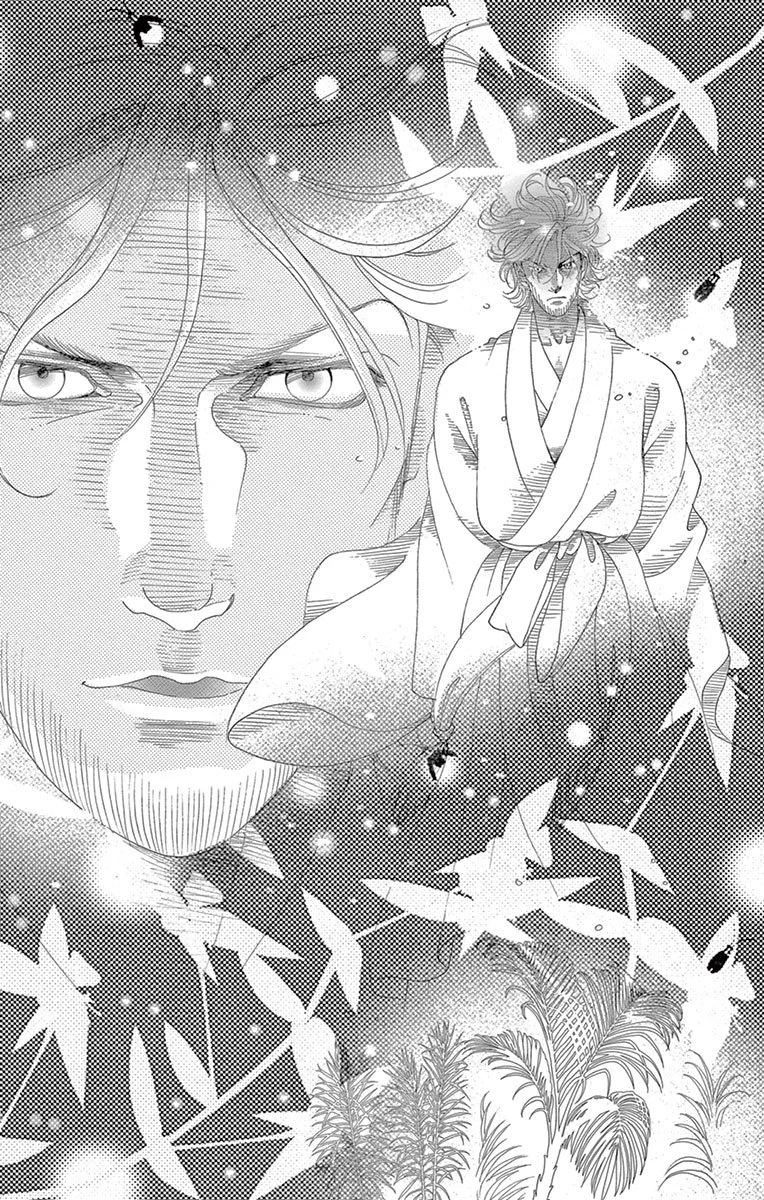
Panel from volume 3, page 87.
©Chiho Saito/Shogakukan
One of the great things about this chapter is that it introduces Yoshino no Miya! He has an equivalent in the original Torikaebaya monogatari, but like many of the characters in the manga, his role and characterisation are expanded here. He is a learned man who has studied various esoteric subjects in China, and was once an important figure at court until he left amid controversy and became an ascetic.
When Sara and Suiren first encounter him, both are immediately reminded of the tengu that is supposed to have cursed them – something I talked about in a much earlier blog post. They have this impression because, like the tengu gang from Episode 1, Yoshino is dressed in the clothes of a yamabushi. His divination skills – predicting years earlier that the Togu we know would become Togu, determining Sara and Suiren’s secret just by looking at their faces – also contribute to the sense that he is supernatural in some way.
I’ve mentioned previously that the idea of the tengu’s curse is greatly expanded in the manga from what was, in the original text, a brief explanation of what the siblings’ deal was and why it had been resolved. Basically, in Torikaebaya monogatari, it is revealed in a dream far into the story that a tengu cursed the father due to bad karma, causing the siblings’ situation, but the curse has now been alleviated.* But in the manga, the siblings believe they themselves are cursed and don’t know what to do about it.
*In the published version of Willig’s translation, this is attributed to the father becoming a devout Buddhist – maybe due to editing an ambiguous line in the first version – but a reviewer said it was actually the tengu that found religion. Incidentally, the original original wording genuinely does seem quite ambiguous.
Combined with associations between tengu, yamabushi and other monks, this could be a reason for Torikae baya’s Yoshino to be repeatedly identified with the tengu. Apart from this first appearance, he also later compares himself with a tengu, he is very knowledgeable about fate/destiny, and he treats his old difficulties at court as a dark past he has struggled to turn his back on.
Altogether, we end up with a fascinating character and an important layer of the tengu/curse motif in Torikae baya, which is, for me, one of the most interesting examples of the manga expanding on aspects of the original story.