Torikae baya as shojo manga
This post looks a bit at genre/publishing format and why this information might be useful when thinking about Torikae baya. I’ve referred to this series as “shōjo manga” in a few places – conferences, the about page of this site – but this isn’t necessarily a straightforward assertion, and it also carries some implications with it.
If you’ve made your way here, chances are you already have an idea of what shōjo manga is. Manga is traditionally categorised according to the broad target demographic of the magazine it was originally published in (with exceptions such as manga that isn’t in a magazine in the first place), with the main such categories being shōjo (girls), shōnen (boys), josei (women) and seinen (men). Not all readers of each magazine fit the supposed target demographic based on age/gender; in fact, I think it’s fair to say many don’t, especially among the fan communities for individual series, where you find fans who identify as, for example, fujoshi or otaku. Even so, the categories matter because as a result of their historical development – especially in the case of shōjo and shōnen – certain aesthetic and narrative tendencies dominate in each one. They are therefore often described as genres rather than just publishing formats.
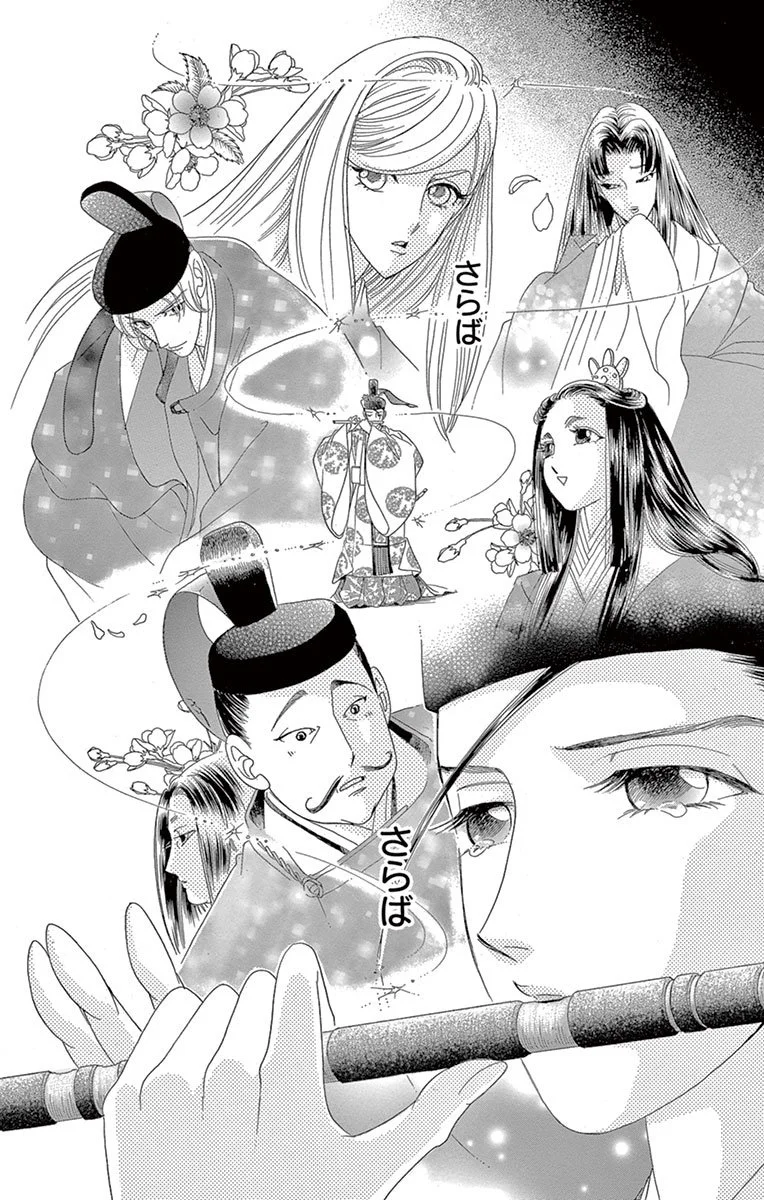
An example of shōjo-style page layout in Torikae baya.
From volume 5, page 100. ©Chiho Saito/Shogakukan
So, Torikae baya must be a shōjo manga, right? Well… that isn’t quite so clear. I’ve seen it described as both shōjo and josei, and not always with an acknowledged point of reference. What about Flowers, the magazine where it was published? Also ambiguous. Sites for reading manga online like cmoa and Renta! sort magazines under the traditional categories, but they’re inconsistent on whether Flowers is a shōjo or josei magazine, and confusingly they sometimes don’t label Torikae baya the same as the magazine itself. Fascinatingly, the English and Japanese Wikipedia pages for Flowers cite the very same source for the magazine’s category… and somehow reach opposite conclusions.
If we look at that source, a page where Shogakukan promotes the magazine to potential advertisers, we can see how this has come about. It refers to the target readers as “thirty-plus female manga lovers” (30代以上の漫画好き女性), which seems to align with the josei category, but also portrays the featured manga writers as “legends” who were involved with shōjo manga specifically since the formative years of the genre. But even though this does open up the potential for confusion, it does suggest at least that there is a distinct vision for the magazine. And elsewhere, this vision becomes clearer: another Shogakukan page for the magazine again emphasises the involvement of “veteran” authors, while describing its content as “an evolved form of shōjo manga” (少女まんが進化形) with the “soul” of shōjo; the Flowers Twitter account, meanwhile, straightforwardly calls it a shōjo manga magazine.
In the same way, Saito’s emphasis is always on shōjo manga, regardless of how the magazine might be categorised. For example, in the final afterword, she mentions wanting to make the story work as shōjo manga. After all, that’s the environment she’s always worked in – she is the kind of “veteran” writer that Flowers revolves around.
This means that the original readers of Torikae baya are people who picked up Flowers and decided to read a Saito Chiho manga, and this affects their expectations. The series is therefore situated in the context of classic shōjo manga conventions. Common aesthetic elements include floral decoration and enlarged eyes, originating in the illustrations common in shōjo magazines before manga became a significant part of what they published. Some argue that this style, with regular closeups on characters’ faces and text outside of speech balloons acting as a kind of inner monologue or voiceover, evokes empathy in readers, drawing them into the fictional character’s interior world. Shōjo manga also originated elaborate page layouts with techniques like overlapping panels and full-body views of characters taking up most of the page, which later expanded into other manga categories.
Why does it matter that Torikae baya is shōjo manga? In terms of its thematic content, it continues a long shōjo tradition of portraying gender non-conforming characters going back to influential 1970s series like The Rose of Versailles (Versailles no bara) and continuing through the decades, including several of Saito’s own works. Maybe you know one of them! Shōjo series based on Heian period literature are also not uncommon.
We can recognise plenty of aesthetic features of shōjo manga in Torikae baya too, sometimes employed in quite clever ways. With the simplified style of shōjo manga, it’s common for characters’ faces to be difficult to differentiate, with details like hair (style and colour) and clothes doing that job instead. You might have heard of this phenomenon by light-hearted, somewhat pejorative terms like “same face syndrome”, but in this context at least, it can also be seen as an aspect of an “aesthetic of sameness” where matching is preferred over contrast. In Torikae baya, this preference is arguably an advantage: rather than emphasising Sara and Suiren’s differences, Saito can lean on genre conventions and draw them pretty much identically, making it believable that their secret can go undetected and highlighting their special connection.
There are of course other ways in which Torikae baya operates within shōjo conventions, but there are also times when the challenges of adaptation require solutions from outside of those established methods. But that’s a topic I’ll save for another day!